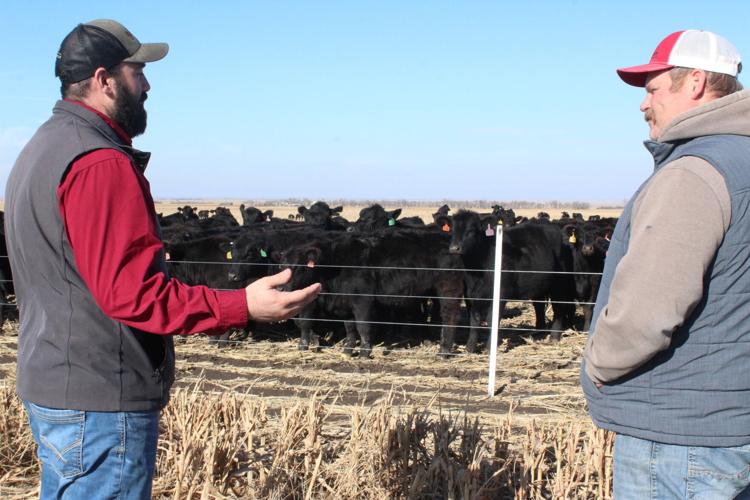
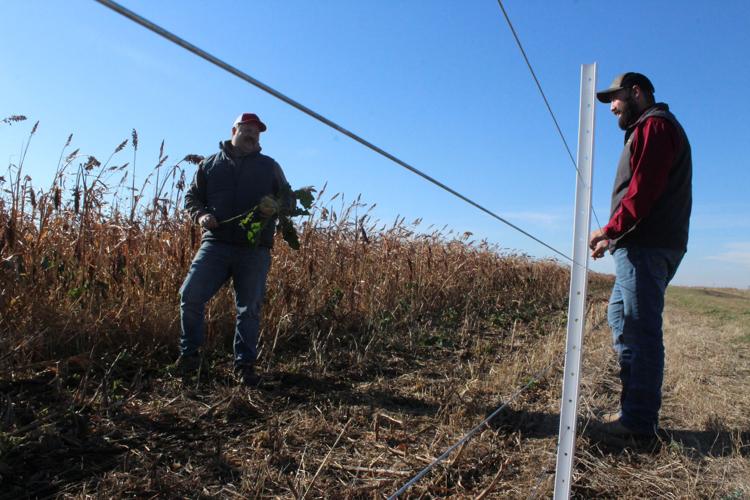
GFP biologist John Mayrose and AJ Munger of Eagle Pass Ranch discuss grazing options while a group of heifers look on.Â
Tri-State Neighbor photo by Janelle Atyeo
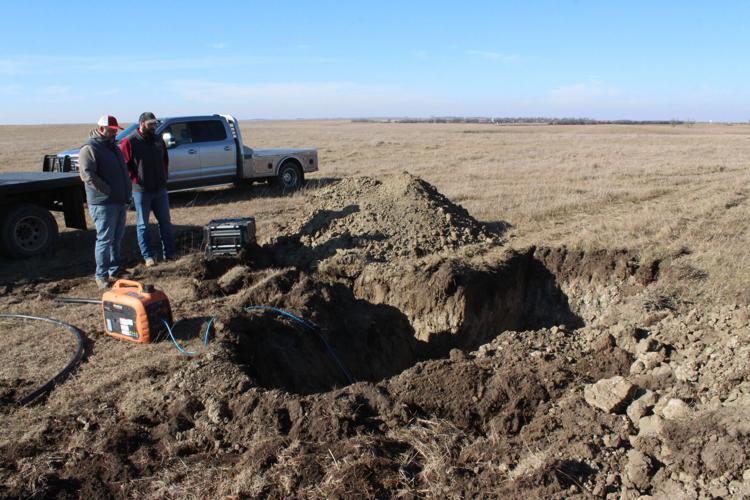
On a sunny afternoon in mid-November, crews were piecing together water lines in a remote pasture, one the Mungers have never been able to graze effectively. Once the line is complete, it will support two 12-foot water tanks and 300 to 400 cows.
Tri-State Neighbor photo by Janelle Atyeo
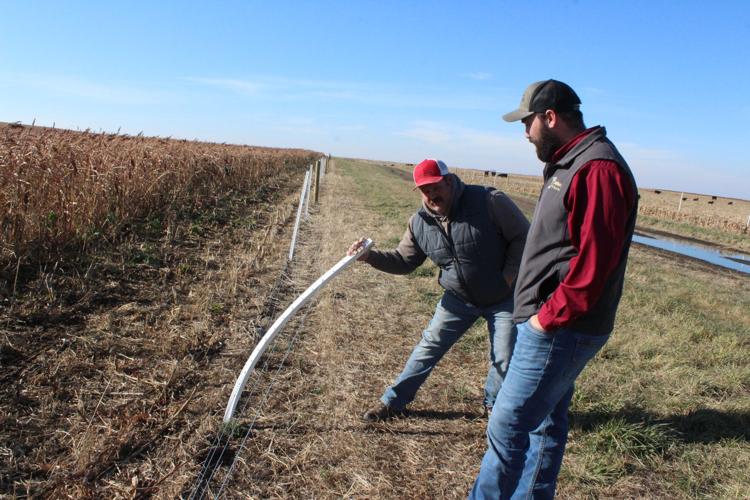
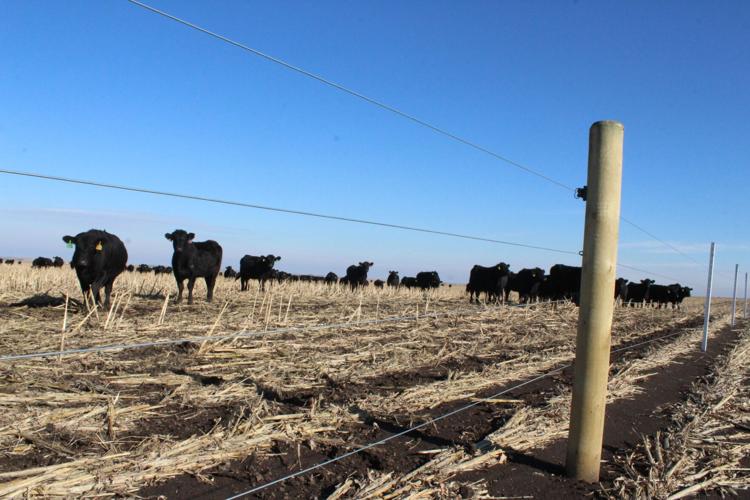
AJ Munger shows the flexibility of the PVC fence posts used in a new fencing project at Eagle Pass Ranch. The post acts as the insulator, and it’s covered with a UV coting to make it last longer.Â
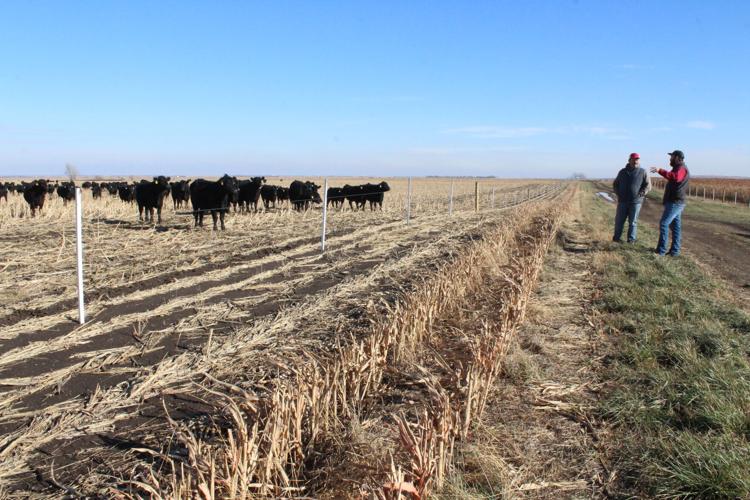
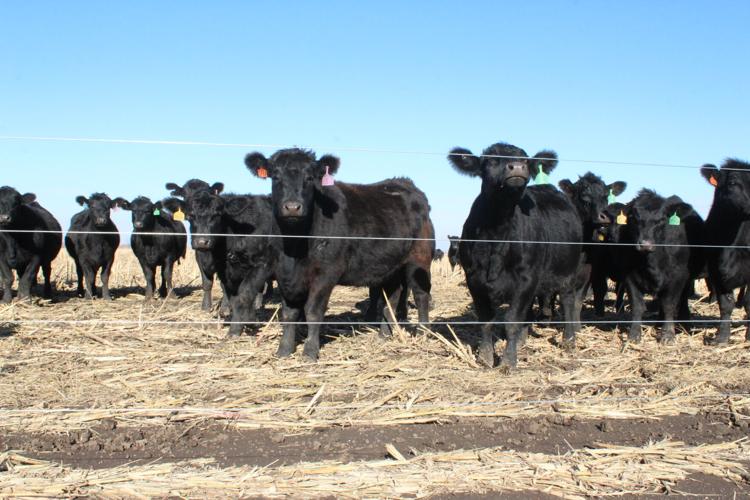
A herd of 350 bred heifers graze a quarter of milo that had been chopped for silage at Eagle Pass Ranch near Highmore, S.D. A partnership to install fence and water tanks has allowed the operation to graze new ground.
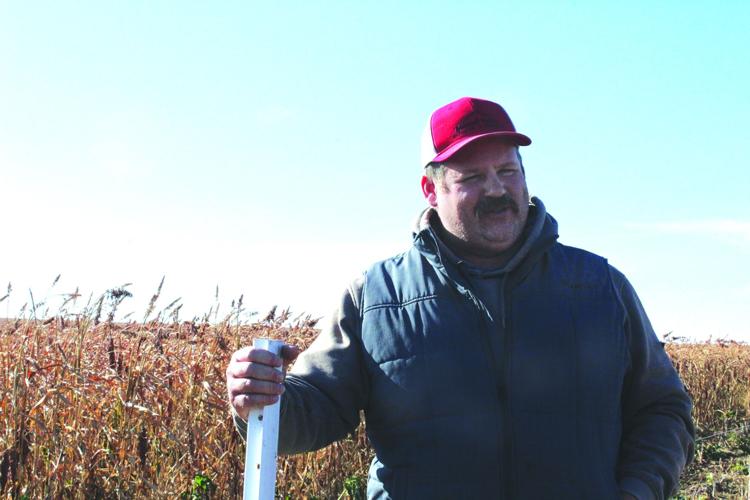
AJ Munger of Eagle Pass Ranch and South Dakota Game Fish and Parks Biologist John Mayrose, look over a field of forage sorghum Munger's cattle were set to graze this winter. A partnership with GFP allowed the Mungers to install fence and water tanks to more effectively graze pastures and crop land. “There’s a lot of food out there for them,â€� Mayrose said.Â
AJ Munger of Eagle Pass Ranch and GFP biologist John Mayrose look over a group of bred heifers grazing milo stubble. GFP private lands habitat biologists help farmers improve their pastures in ways that benefit both cattle and wildlife.Â
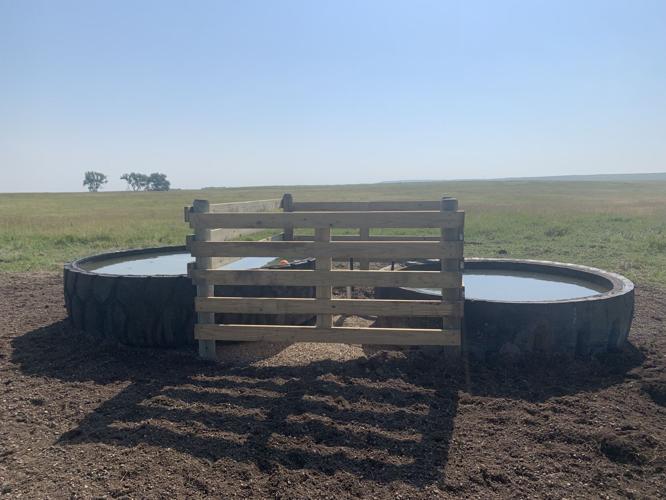
A South Dakota Game Fish and Parks program helped the Mungers install these water tanks in a remote pasture. Having a reliable water source allows the ranch to rotate pastures and graze more effectively, which also improves wildlife habitat.Â
Raised in small town South Dakota, Janelle is enjoying her time as editor of Tri-State Neighbor and Midwest Messenger while raising kids, chickens and no till vegetables in central Sioux Falls. Reach her at janelle.atyeo@lee.net.
On a sunny afternoon in mid-November, crews were piecing together water lines in a remote pasture, one the Mungers have never been able to graze effectively. Once the line is complete, it will support two 12-foot water tanks and 300 to 400 cows.
AJ Munger shows the flexibility of the PVC fence posts used in a new fencing project at Eagle Pass Ranch. The post acts as the insulator, and it’s covered with a UV coting to make it last longer.Â
AJ Munger of Eagle Pass Ranch and South Dakota Game Fish and Parks Biologist John Mayrose, look over a field of forage sorghum Munger's cattle were set to graze this winter. A partnership with GFP allowed the Mungers to install fence and water tanks to more effectively graze pastures and crop land. “There’s a lot of food out there for them,â€� Mayrose said.Â
AJ Munger of Eagle Pass Ranch and GFP biologist John Mayrose look over a group of bred heifers grazing milo stubble. GFP private lands habitat biologists help farmers improve their pastures in ways that benefit both cattle and wildlife.Â
A herd of 350 bred heifers graze a quarter of milo that had been chopped for silage at Eagle Pass Ranch near Highmore, S.D. A partnership to install fence and water tanks has allowed the operation to graze new ground.
A South Dakota Game Fish and Parks program helped the Mungers install these water tanks in a remote pasture. Having a reliable water source allows the ranch to rotate pastures and graze more effectively, which also improves wildlife habitat.Â